


The midterm elections on November 3 could mark a turning point in United States politics at a time of unprecedented division and polarisation around LGBTQ+ rights. But that’s also why Jaelynn Scott wants to step in. She wants to make history in her country, and in doing so, join the front line of the fight for her community’s rights.
She could soon become the first Black trans woman ever elected to a state legislature.
“Government changes when you have people who have lived experience actually fighting for solutions that work for them,” Scott told us as we met in Seattle last month.
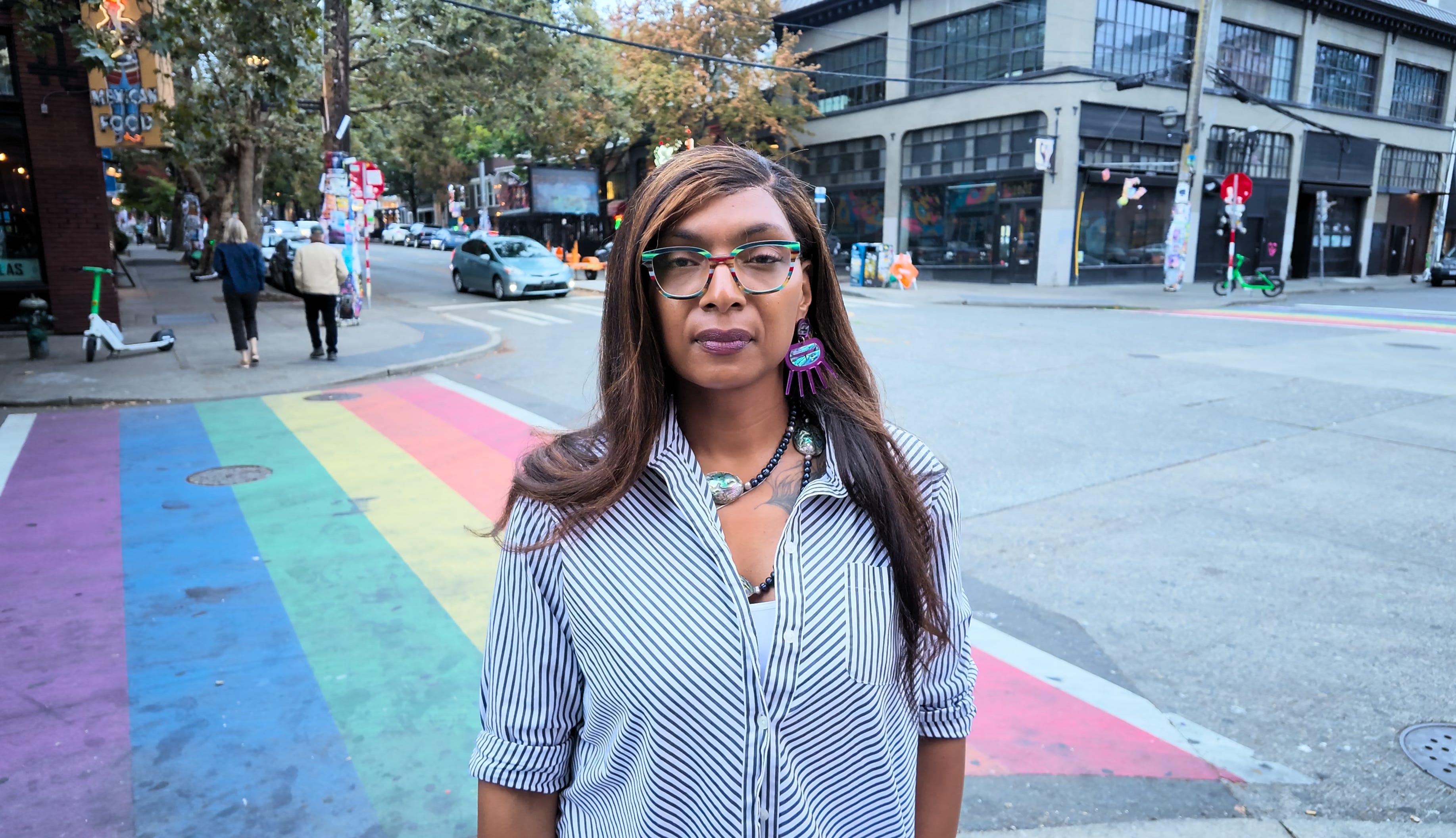
She has good reason to be confident in her bid for office. She’s running for the Washington State House of Representatives, the lower chamber of the state Legislature, representing the 37th Legislative District in Seattle. She won the Democratic primary last August with more than 87% of the vote, and pundits expect her to win the seat on November 3. If she succeeds in doing so, she will also become the first trans legislator in Washington state.
Despite some progress, the U.S. lags behind many Western countries when it comes to LGBTQ+ visibility in politics. The number of openly queer elected officials in the country has increased by 420.7% since 2017 to 1,333, according to data from 2025 by the Victory Institute. But in relative terms, they are still very few: they make up 0.26% of all elected officials, while the latest Gallup survey on the topic showed 9% of Americans identified as LGBTQ+. There’s one out senator (out of 100) and 12 out representatives in the House (out of 435). By contrast, at least 78 MPs in the United Kingdom’s House of Commons identify as LGBTQ+, according to the latest data. That’s about 12% of the 650 seats. Meanwhile, three European countries have appointed an openly queer head of state: Latvia, San Marino and Serbia, where Ana Brnabić became acting president last month. On top of that, eight countries in Europe have elected out LGBTQ+ heads of government, from Belgium and Ireland to the Netherlands and Andorra.
But for Scott, it’s not just about representation or identity politics. It’s about what she calls ‘targeted universalism’.
“Targeted universalism means that we have someone who has experienced the intersectional ways that society puts pressures on our pockets, and on our daily lives and access to health care,” she told us. “When you have someone who has experienced this and you come up with a solution for that person, we’ll get it right for our entire society. So, it’s really important when we have women in office, that we get rights that actually protect workers in general, not just for women. When we get folks of colour, we diversify our workforce and find rights that work for all of our society.”
In Scott’s opinion, a Black trans woman breaking a glass ceiling is a win for society as a whole: “We hold a certain perspective. And when we get it right for Black trans women, we’re going to have a more inclusive society, more access to healthcare, more access to housing. And that will be better for all Americans, all Washingtonians.”
For some people, it may not be surprising that Washington is poised to elect the first Black trans woman to a state legislature in the U.S. The state is among the most LGBTQ-friendly in the country. Washington banned discrimination on the basis of someone’s sexual orientation in 2006, became the first U.S. state to pass marriage equality by popular vote in 2012 and banned so-called “conversion therapies” for minors in 2018. More recently it has become one of the country’s most prominent “shield states” to protect access to gender-affirming care and the providers who offer it.
But those milestones, Scott argues, shouldn’t suggest that all is well. “It says something that in 2026, I’m running to be the first trans legislator in one of the most progressive states in the country,” she said. “What does that say about our democracy? That we don’t even have that basic access, not to mention healthcare, not to mention housing, and the level of, the rates of murders of trans women of colour in this state.”
Scott did not want to become a politician. She was an organiser for Black and trans rights activism. But recent political developments have pushed her to try to continue her fight in office due to what she describes as a “lack of urgency” by those elected.
“We’re at this critical moment where many of the communities that I serve and people who identify as I do, as a trans person, as a Black woman, as a Black trans woman, are feeling under attack; and under attack from their own administration, our presidential administration.” Jaelynn Scott
President Donald Trump’s administration has rolled back federal recognition and protections for trans and non-binary Americans since taking office in January 2025, with actions spanning legal gender recognition, the military, trans health care, schools, prisons and federal workplace policy. On his first day in office, Trump signed an executive order recognising only two sexes, male and female, assigned at birth, resulting in trans people being unable to update their federal documents to match their gender identity. The administration revived a ban on trans people serving in the military, rescinded Joe Biden-era guidance protecting transgender students from harassment, and moved to restrict federal funding for schools and colleges that did not comply with its restrictions on trans athletes in women’s sports. Trump and his advocates argue these measures will protect cisgender women in single-sex spaces and safeguard children from what they describe as “irreversible” and “harmful” medical interventions.
Amidst this crackdown, shield states like Washington have found themselves in Trump’s crosshairs. As a result of federal efforts to slash funding to hospitals which provide trans care, some hospitals have succumbed to the pressure and restricted access to gender-affirming care for trans minors, according to local media.
But LGBTQ+ advocates are now raising the alarm about two new ballot initiatives allegedly aimed at “protecting” girls’ sports and parents’ rights.
Voters in Washington will decide in November whether to bar trans student-athletes from girls’ K-12 school sports – usually for students under 18 years old. The initiative would require a doctor to verify the sex assigned at birth of every girl in the state who wants to play sports – in some cases, requiring genital exams. The initiative, which qualified for the ballot in January, was backed by Let’s Go Washington, a political action committee founded by conservative hedge fund manager Brian Heywood. Heywood’s group is also behind another ballot initiative to restore a 2024 state ‘parental rights’ law that the Democratic-controlled Legislature amended last spring, which details what information schools share with parents about their child’s mental health and medical records. State LGBTQ+ organisations and Democrats, including Governor Bob Ferguson, oppose the initiative, arguing it would put LGBTQ+ student s at risk of being outed to unsupportive parents.
The initiatives mirror similar anti-LGBTQ+ ballot measures that have made their way to the November 3 vote across four other U.S. states: Arizona, Colorado, Missouri and Nebraska. All of them aim to prevent trans minors from playing school sports according to their gender identity or from accessing gender-affirming care. If they pass in the vote, they generally become law without state legislatures having to pass them.


The backers of these ballot initiatives, Scott said, “want to strip our governments of social services to impose their norms on our society. And they’re using our bodies to do that.”
That’s why she wants to fight back against what she called “coordinated” efforts to undermine LGBTQ+ rights, from a position within the state legislature.
“They are cracking down and threatening our hospital systems, threatening our attorney general, threatening our state if we don’t conform to their expectations of a restrictive society,” she said. “We are resisting. And thankfully, [in Washington state] we have a supportive government, and we have a community that supports us, and that has over and over again voted and confirmed that we are supportive of everyone in Washington state, especially our trans community.”
Thanks for reading Openly’s newsletter. This is the first story in a special report on trans rights in the U.S. – don’t forget to subscribe for free to keep receiving our LGBTQ+ journalism directly in your inbox.
Talk soon,
Enrique Anarte
Multimedia editor, Openly
Openly is a non-profit LGBTQ+ news platform powered by the Thomson Reuters Foundation. You can follow our video reporting on TikTok, Instagram and YouTube. If you want to support our journalism on queer issues around the world, get in touch: openly@thomsonreuters.com
🏳️🌈🏳️⚧️🔥🫶💖🐰🦄💯💖🫶🔥🏳️⚧️🏳️🌈